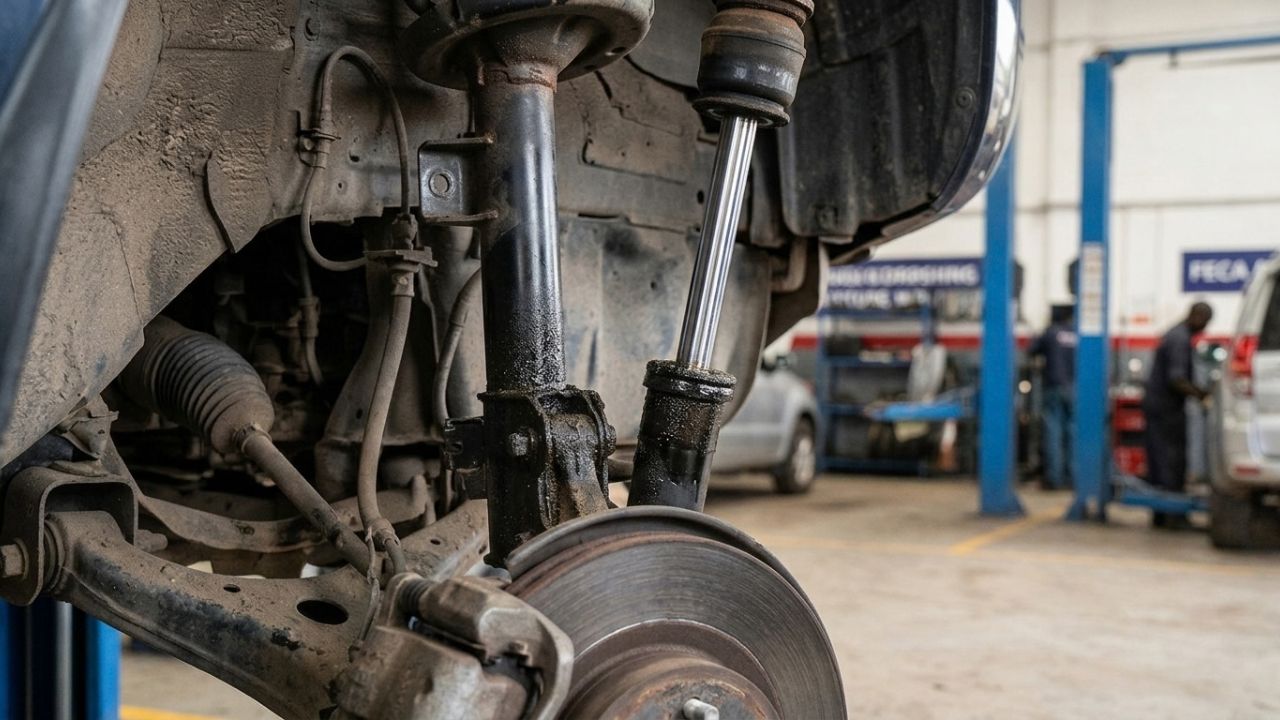
Shock Absorber Oil Leak it is! So, you notice a small oily patch around your shock absorber.
At first, it may not look like a big deal.
“Ni mafuta tu.” 😅
But if that oil is coming from the shock absorber, it could be a sign that the component is no longer doing its job properly – Regardless of hybrid car or non-hybrid cars.
Shock absorbers are an important part of your vehicle’s suspension system. They help control the movement of the springs and wheels, keeping the tyres in contact with the road while improving stability, braking, handling and ride comfort.
So, why do shock absorbers leak oil?
1. Worn or Damaged Seals
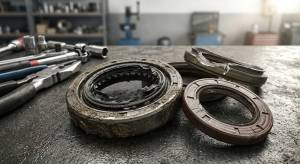
Inside a shock absorber are seals designed to keep the hydraulic fluid contained.
Over time, these seals can deteriorate due to age, heat, friction and constant movement. Once a seal becomes worn or damaged, hydraulic fluid can begin escaping around the piston rod.
A small amount of dirt or moisture around the area can make the problem worse by accelerating wear.
In other words, an ageing seal can eventually lose the fight against thousands of kilometres of movement.
2. A Damaged Piston Rod
The piston rod moves in and out every time your suspension works.
If the rod becomes scratched, bent or corroded, it can damage the seal every time it moves through it.
For example, repeated impact from stones and debris, corrosion or damage caused by an accident can leave the rod with a rough surface.
That rough surface can then wear the seal much faster — eventually allowing the hydraulic fluid to escape.
3. Rough Roads Put Suspension Components to Work
Let’s be honest: Kenyan roads can give a suspension system plenty of exercise. 😅
Potholes, speed bumps, uneven surfaces and rough roads subject the suspension to repeated impacts.
Your shock absorbers are designed to handle this work, but constant heavy impacts can accelerate wear on the seals, piston rods and other suspension components.
This doesn’t mean you should avoid every rough road — sometimes you don’t have a choice.
It simply means your suspension deserves more attention when your vehicle regularly operates in demanding road conditions.
4. Age and General Wear
Shock absorbers don’t last forever.
Even when there is no obvious damage, continuous movement eventually causes internal components and seals to wear.
The result can be reduced damping performance and, eventually, fluid leakage.
This is why suspension inspection should be part of your vehicle’s regular maintenance — especially as the vehicle gets older or the mileage increases.
5. Poor-Quality or Incorrect Replacement Parts
Sometimes the problem starts with the replacement part itself.
A poorly manufactured shock absorber may have inferior seals, materials or manufacturing tolerances, which can contribute to premature failure.
This is why choosing the correct shock absorber for your specific vehicle matters.
Cheap today can become expensive tomorrow when a suspension component fails prematurely and causes additional problems.
How Do You Know Your Shock Absorber May Be Failing?
Oil leakage is one warning sign, but it isn’t the only one.
Watch out for:
- Excessive bouncing after going over bumps
- Vehicle pulling or feeling unstable
- Nose-diving when braking
- Uneven tyre wear
- Knocking or unusual suspension noises
- Excessive body roll when cornering
- A noticeably harsher or less controlled ride
- Visible oil around the shock absorber
One symptom alone doesn’t always tell the whole story. Suspension components work together, so a proper inspection is important before deciding what needs replacing.
Can You Keep Driving With a Leaking Shock Absorber?
This is where many motorists make the mistake of waiting.
A leaking shock absorber may still allow the vehicle to move, but that doesn’t necessarily mean the suspension is functioning properly.
As damping performance deteriorates, the vehicle may become less stable and the tyres may not maintain optimal contact with the road, particularly over uneven surfaces.
That can affect handling, braking and overall vehicle control.
So if you spot oil around a shock absorber, don’t simply wipe it off and forget about it. Have the suspension inspected.
Can a Leaking Shock Absorber Be Repaired?
It depends on the type of shock absorber and the extent of the damage.
Some specialised shock absorbers can be rebuilt, but many modern shock absorbers are sealed units designed to be replaced rather than opened and refilled.
If the piston rod, seal or internal components are damaged, the appropriate solution may be replacement.
A proper inspection will determine what is actually wrong instead of replacing parts based on appearance alone.
Don’t Ignore What Your Suspension Is Telling You
Your suspension doesn’t usually fail without giving you clues.
A strange knock.
A car that keeps bouncing.
Uneven tyre wear.
Oil around the shock absorber.
That feeling that the car doesn’t handle the way it used to.
These are all reasons to pay attention.
That bump you felt? Your suspension felt it too.
And if the ride doesn’t feel right, don’t just turn up the music. 😂
Get the suspension checked.
This is FECA, Visit us in Thika – 0783 331 328